WRAP to present at DC Rotary Club
WRAP is thrilled to be presenting on September 4, 2013 at the Rotary Club of Washington, DC!
To learn more, visit http://bit.ly/12LWVYW

WRAP is thrilled to be presenting on September 4, 2013 at the Rotary Club of Washington, DC!
To learn more, visit http://bit.ly/12LWVYW
WRAP Completes Inaugural West Bank Project
Village of Battir, Palestine | June 26, 2013
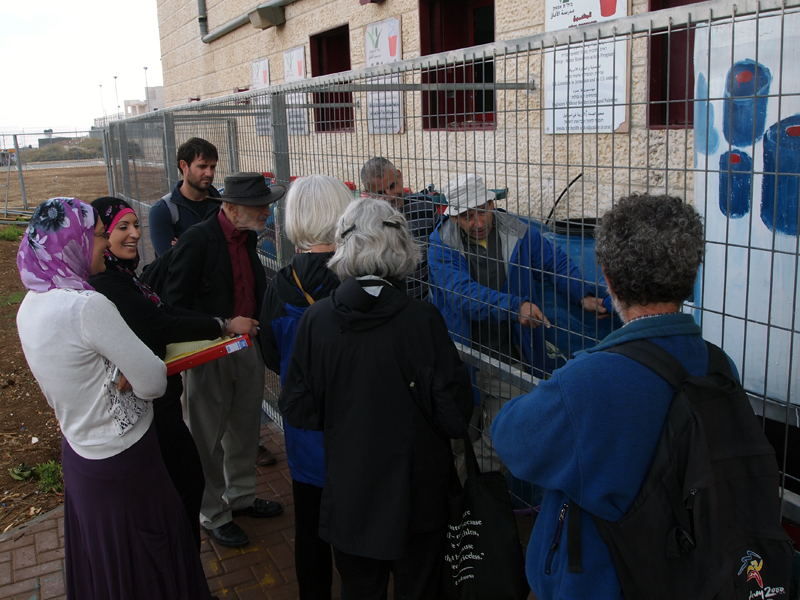
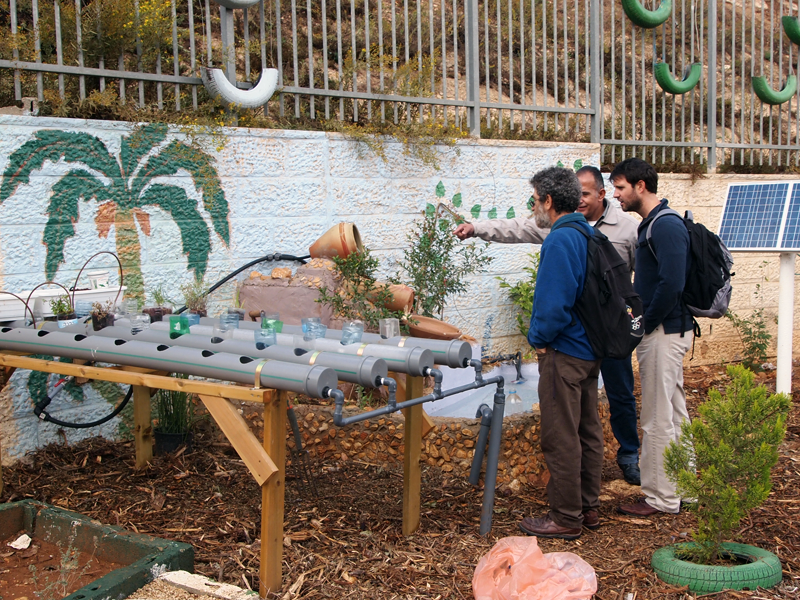
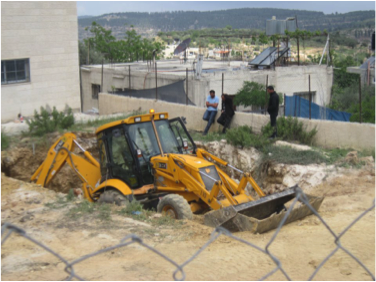 The Water Resources Action Project (WRAP) recently completed construction of its inaugural West Bank project. WRAP, in partnership with Friends of the Earth Middle East (FoEME), constructed a cistern system at the Battir Girls High School located near Bethlehem in the Village of Battir, Palestine. The school has 120 female students in three grades. This is WRAP’s third project in the Middle East, following successful rain harvesting installations at two schools in East Jerusalem, which have thus far collected and utilized over 180,000 liters of rainwater for toilet flushing and community gardening. “Establishing and successfully maintaining this initial project in the West Bank is essential to fulfilling WRAP’s commitment to addressing water security issues within this region in an informed manner,” stressed WRAP’s President, Brendan McGinnis. “Our hope is that this effort will not only become a model that may be replicated in other areas of the West Bank, but also serve as an integral part of the network of schools with similar programs that WRAP is establishing throughout Israel, Palestine, and eventually, Jordan.”
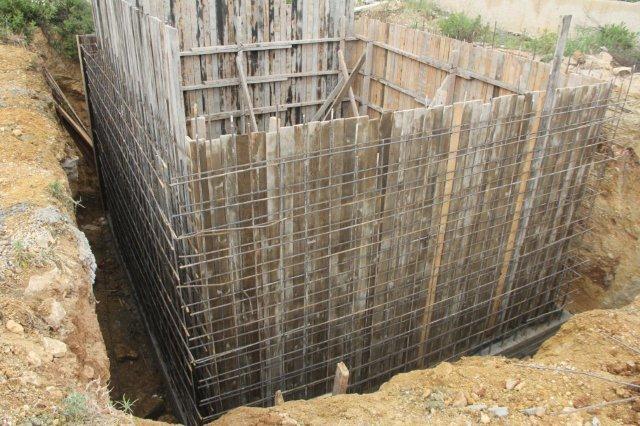
The cistern system, an underground cement storage tank, holds rainwater collected and diverted from the roof of the school. The rainwater is then pumped to the school’s restrooms, where it is utilized for toilet flushing. Due to the number of children on this centralized site, toilet flushing is responsible for nearly 85% of the school’s total water usage. The water is critical to ensuring reliable usage of clean restrooms throughout the entire school year.
Previous WRAP projects have demonstrated that rain harvesting systems can supply upwards of 50-70% of a school’s total water needs during its nine months of operation. With additional water availability made possible by the cistern, the school will in time also be able to implement a desired summer camp and community garden. The school will also soon realize a reduced reliance on municipal water and the attendant costs – all critical elements to water security and stability within this increasingly arid region of the world. The Village of Battir and surrounding area receive on average 653mm (25 inches) of annual rainfall, primarily between the months of October through April. Thus, rainwater harvesting during this timeframe is crucial.
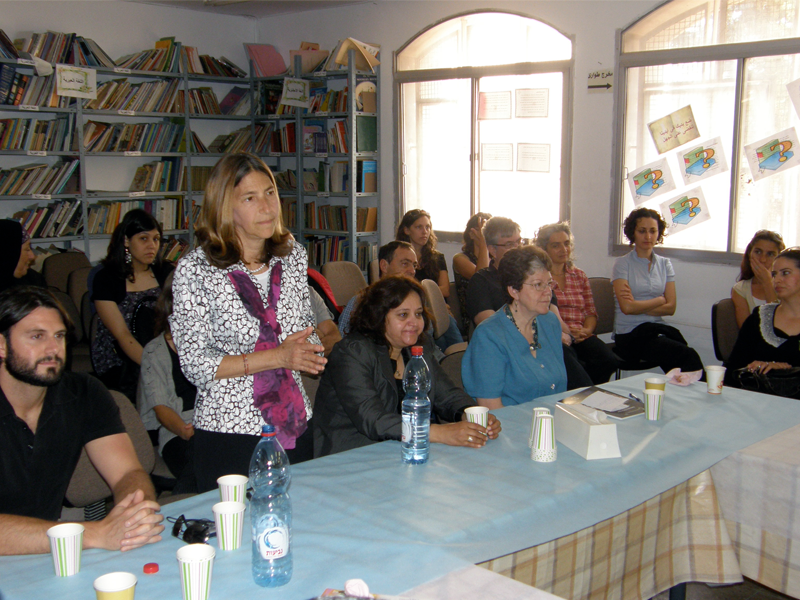
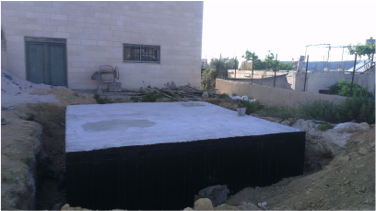 The overall effort also includes a supplemental environmental curriculum overseen by FoEME’s Community Coordinator to heighten water awareness and conservation, while empowering local water resources stewardship. Water conservation, the interconnectedness of the surrounding ecosystem, and hands-on student engagement of monitoring and reporting of rainfall, harvesting, and usage data serve as the foundation for the program. WRAP and FoEME will also work closely with the school to ensure the system is regularly and properly maintained. WRAP’s McGinnis added, “Working closely with our grassroots partners, Friends of the Earth Middle East and Battir’s community leadership, on every aspect of this effort will help to ensure that all involved are committed to its long-term success.”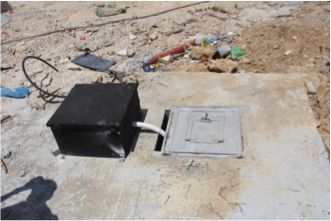
With the installation of the cistern at Battir School and the parallel environmental curriculum, WRAP strives to not only alleviate the struggles associated with water shortages in this region, but also encourage the students and greater community to collaborate on stewarding this precious natural resource.
WRAP is a supporting partner of the American University School of International Service’s (SIS) Water Cooperation & Peace Practicum. The practicum, underway and continuing throughout the summer, aims to evaluate the peacebuilding significance of cooperative Palestinian-Israeli water projects. A group of eight M.A. candidates, led by two AU Professors, is working to research, collect data, and conduct field studies at project sites within Israel and the Palestinian West Bank. WRAP congratulates the AU team for its efforts in the region.
To learn more about the practicum, click here.
The Water Resources Action Project’s installation and program at the Sur Baher Girls School in East Jerusalem was recently profiled in the Christian Science Monitor. The article entitled Environmentalists tap Palestinian schoolchildren to clean Jerusalem’s holy valley focuses on the school’s environmental education program and ongoing efforts to reduce the school’s contributions to the “Six Olympic-size pools of trash and sewage [that] are dumped in Kidron Valley, which abuts Jerusalem’s holiest sites, every year.” The article appears in the April 22 online edition as part of the news organization’s ongoing coverage of current events and issues in the Middle East.
For more information and to read the article in full, visit the CSMonitor website at http://www.csmonitor.com.
The Water Resources Action Project (WRAP) recently broke ground on its third project, a cistern system at the Battir Girls High School, located near Bethlehem in Battir, a Palestinian village. Visited and vetted through WRAP President and THG Managing Partner Brendan McGinnis, the school has 120 female students in three grades. WRAP funds and constructs rainwater-harvesting systems at schools throughout the Middle East, accompanied by a strong educational program and monitoring procedures.
Immediate benefits to the school and surrounding community include reliable usage of clean restrooms throughout the entire school year. The school will also be able to implement a summer camp and community garden, both made possible with the installation of WRAP’s rain harvesting project.
On April 9, Mr. McGinnis presented at Monmouth University’s, Global Understanding Convention in New Jersey, providing his first-hand account of the Middle Eastern water conflict, resulting impact on human health and the environment, what difference can be made now, WRAP’s role, and lessons learned along the way. To view his full remarks and accompanying presentation, visit this month’s featured column at http://bit.ly/THGApril2013FC.
To learn about WRAP and become involved, visit www.wrapdc.org.
What: Global Understanding Convention
When: April 9, 2013
Where: Monmouth University
THG’s Brendan McGinnis, in his role as President of the Water Resources Action Project (WRAP), will be presenting on the challenges that securing reliable and accessible water pose to the quality of life in the Middle East and WRAP’s efforts to mitigate these challenges.
WRAP funds and constructs rainwater harvesting systems at schools throughout the region, accompanied by a strong educational program and monitoring procedures. To date, WRAP has installed two such systems in East Jerusalem. WRAP’s next project, a cistern system, will be located at the Battir Girls High School, near Bethlehem in the West Bank. Mr. McGinnis will provide his first-hand account of the Middle Eastern water conflict, resulting impact on human health and the environment, the opportunity to make an immediate difference, WRAP’s role, and lessons learned along the way.
To learn about the Battir School project and contribute to this worthwhile effort that will greatly improve the education and water security of these underprivileged children, visit http://bit.ly/WRAPBattir.
Interview: “Addressing the Middle East Water Crisis – One Rain Drop at a Time”
May 2012
Brendan McGinnis, Founding Member of the Water Resources Action Project (WRAP) recently sat down for an interview with Ed Saltzberg, Managing Director of the Security and Sustainability Forum (SSF). The 23 minute interview explores the origins of WRAP, and takes a look at the important issues of water quality, availability, and scarcity faced by the Middle East.
Watch a video recap of the interview.
In The Spotlight: Presentation from Water Resources Action Project Gathering
As posted in The Horinko Group’s April 2012 Newsletter
April 16, 2012
 On March 22, The Horinko Group hosted a Welcoming Reception on behalf of the Water Resources Action Project (WRAP) to raise awareness and build support for the volunteer, non-profit seeking to improve public health for underserved communities in the Middle East through greater water stewardship. WRAP recently completed its second rainwater harvesting project at the underprivileged, special needs Afack School in East Jerusalem.
The gathering included the following remarks and presentation on WRAP’s past and current efforts by Founding Member and THG’s Water Division Director, Brendan McGinnis:
"Let’s start off with a snapshot of what the water conflict looks like in the Middle East. More specifically, I’m going to focus on the bordering regions of Israel, Palestine, and Jordan – the initial focus of WRAP’s efforts. This region is one of growing population that is already dealing with dire water shortage problems. All three of these bordering countries rely on a shrinking and polluted Jordan River, and adding to this problem, the number of rainy days decreases each year. So, as you can imagine, freshwater is a precious resource for this region and its people."
To read the remainder of "In the Spotlight," click here.
Dedication Ceremony for WRAP’s Second Project Scheduled for April 23, 2012
April 2012
 The Only Green Environmental Center in East Jerusalem has announced the dedication ceremony for the Water Resources Action Project’s second installation at the Afack School in East Jerusalem is scheduled for April 23, 2012. The dedication will be held from 8:30 – 11:00 AM and will feature an appearance by the Deputy Mayor of East Jerusalem, Naomi Sur.
WRAP Partners with Only Green to Complete Second Rainwater Harvesting Project
April 2012
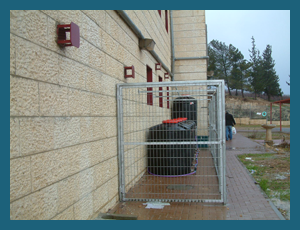 The Water Resources Action Project recently partnered with Only Green, the East Jerusalem Environmental Center, to provide funding for WRAP’s second project. The funded project included the construction and maintenance of the raincatcher system at the Al-Afaq School for Special Education in Sur Baher, a neighborhood of East Jerusalem.
Read the full text of the letter about the project from the Only Green Environmental Center.